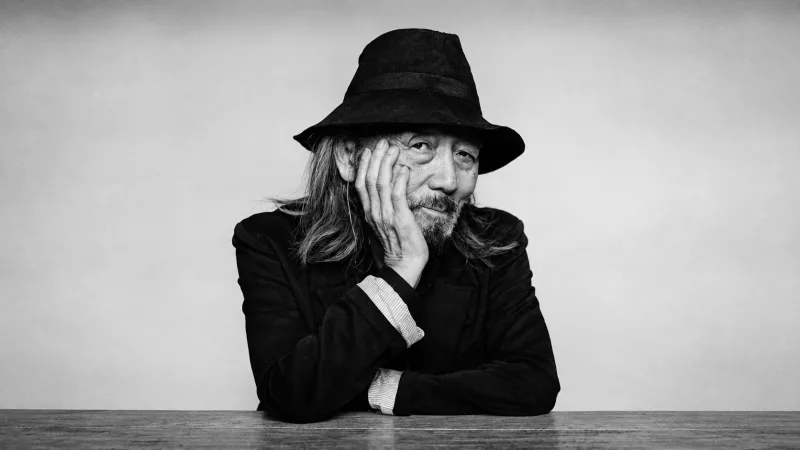


Anthony Vaccarello gave no interviews this season. In their place came a note, handed out with black calla lilies. "I've had this collection in mind for a long time, and finally felt that this was the right moment to bring it to light. It's a very personal one for me, charged with emotion, so this time I'd rather not say too much and let you experience all its shades. With Love, Anthony." The shades should be taken literally.
Saint Laurent was founded in 1961 by Yves Saint Laurent and Pierre Bergé, and Vaccarello has been its creative director since 2016: this show fell ten years and two days after his debut. Let us say it at once, because it is our judgement: this is the tightest and the most personal collection of his decade at the house, and the case for it is made in the cutting before it is made in the colour.
GOLD, REVERSED
The reference was declared. Yves Saint Laurent's autumn 1991 Rive Gauche collection closed entirely in gold, and Vaccarello turns it around: here gold opens and holds the room, and the ending is dominated by black. For the founder, gold was the colour of the sun, and his successor lets it go down.
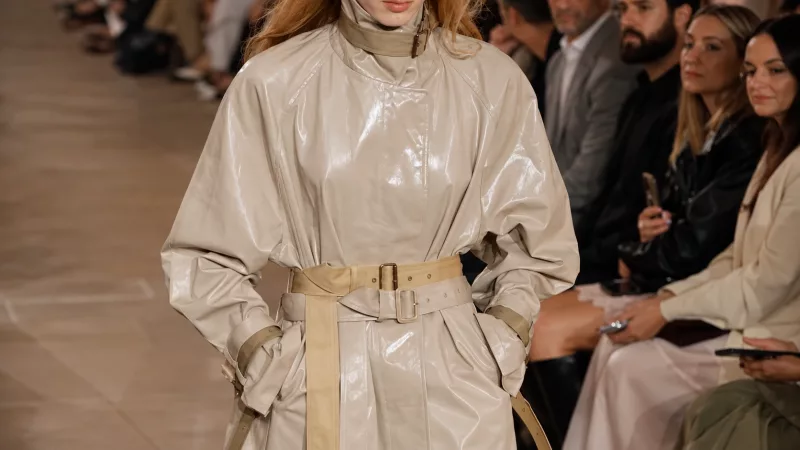
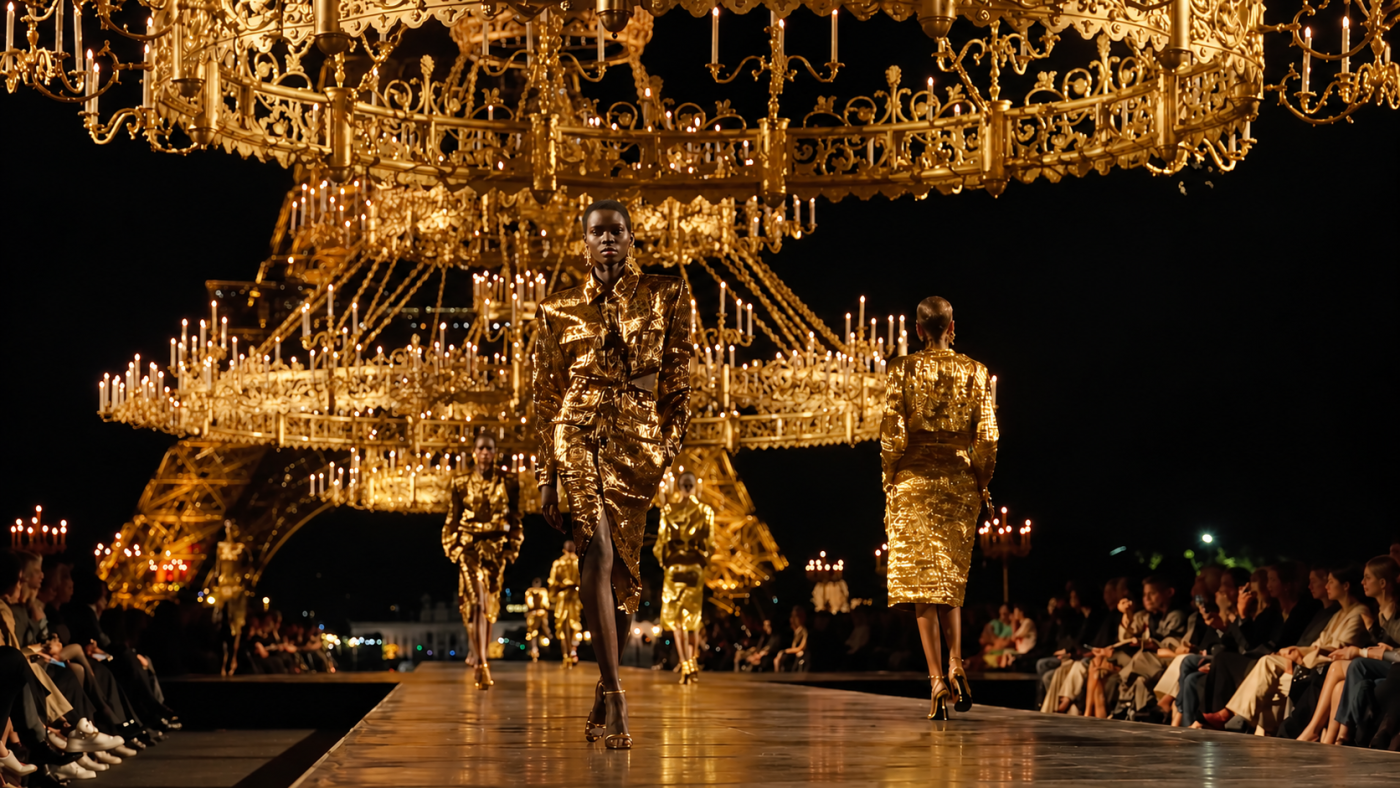
The argument begins before the clothes, in the staging. A glossy black catwalk, three enormous candle chandeliers throwing long shadows, the Eiffel Tower glittering at the start and again at the close, and the score Miles Davis wrote for Louis Malle's Lift to the Scaffold. From there the house codes return without being quoted: the safari jacket, the trench and the muslin scarf are all in place, held in shape and changed in material, among metallic lamé, crushed surfaces and lace. The gold runs through deep bronze, caramel and copper, with the occasional contrasting accent cutting across the monochrome. Then the break arrives, and black takes control.
THE PROOF IS IN THE CUT
The opening look already holds the whole idea: an oversized jacket in crushed metallic gold with a V neckline and notch lapels, a knee length skirt slit at the front from high on the thigh, and a long olive scarf wound at the neck that falls down the back and trails along the floor. An odd surface held by a disciplined cut, and styling pushed well past use. The rest of the show keeps returning to those terms and to no others.
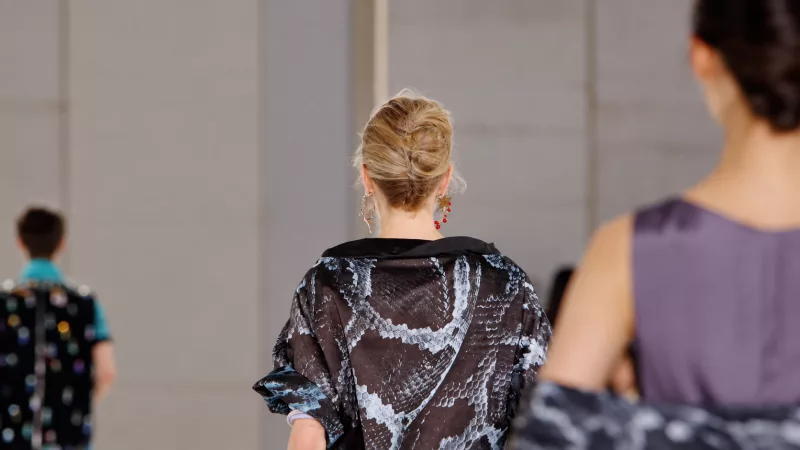
Midway through, metallic macramé appears on a sheath dress with a fully sheer ground, scrolling floral motifs, pockets at the hip and a hem that follows the pattern of the lace rather than cutting straight across it: this is the daywear that announces the sheerness of the evening. Soon after comes the transitional brocade tailoring, jackets with a high collar fastened at the throat and left open over the body, finished with wide cuffs in dark fur, worn over straight trousers cropped above the ankle. A raised textile armour closed with something soft.
The break lands on a black velvet jacket with two jewelled buttons and an oversized bow in crushed shiny cloth set at the waist, over a calf length skirt with a central slit. That is the point where gold stops setting the terms. In the finale the evening vocabulary is rewritten in organza: a sheer black dress with the right shoulder and décolletage bare, a large draped volume wrapping the chest and left arm, a slit opening from the high hip, the skirt trailing along the floor.
What holds the beginning and the end of this show together is not the styling, it is the geometry: a broad structured shoulder above a straight pencil column, fractured by slits. The broad shoulder over the narrow column stays where it is while the colour shifts towards black. Not one bag came down the catwalk, and that absence is a refusal of the commercial shortcut that props up almost every show of this scale.
Ten years inside a house is what buys this. An heir quotes; what happens here instead is that the founder's colour is taken and walked out of the room, one look after another, until black dominates the finale. Charlotte Gainsbourg closed the evening with a song whose refrain repeated "You are so much, Yves Saint Laurent", the founder's name sung over the work of the man who holds it now. The black organza of the closing look is the right word to leave on, the gesture of someone who after a decade had earned the right to let the sun set on the house that called him.