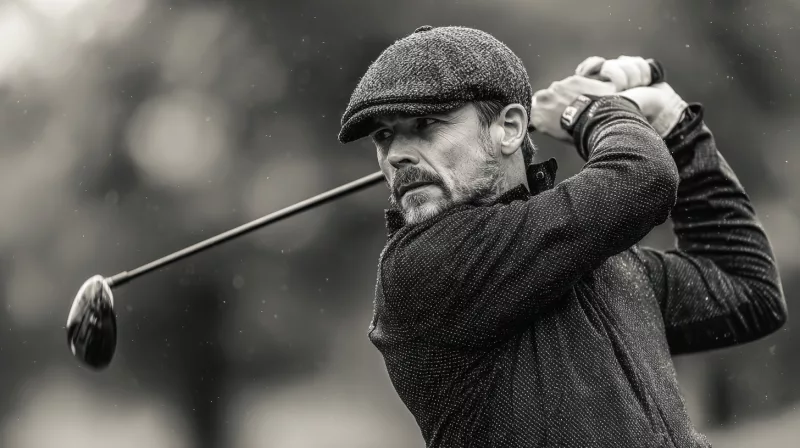

On 14 May 2000, at the GTE Byron Nelson Classic at TPC Las Colinas in Irving, Texas, Jesper Parnevik skipped the putting green before his round. By J.Lindeberg's own account he changed his trousers instead and walked to the first tee in pink. He won. Johan Lindeberg named the method only afterwards, "The Pink Strategy": the event was not the score, it was the act of dressing chosen over the warm-up. Twenty-six years later that pink is a catalogue entry, and the man who wore it is a product name.
A REVOLUTION MADE BY LOOKING BACK
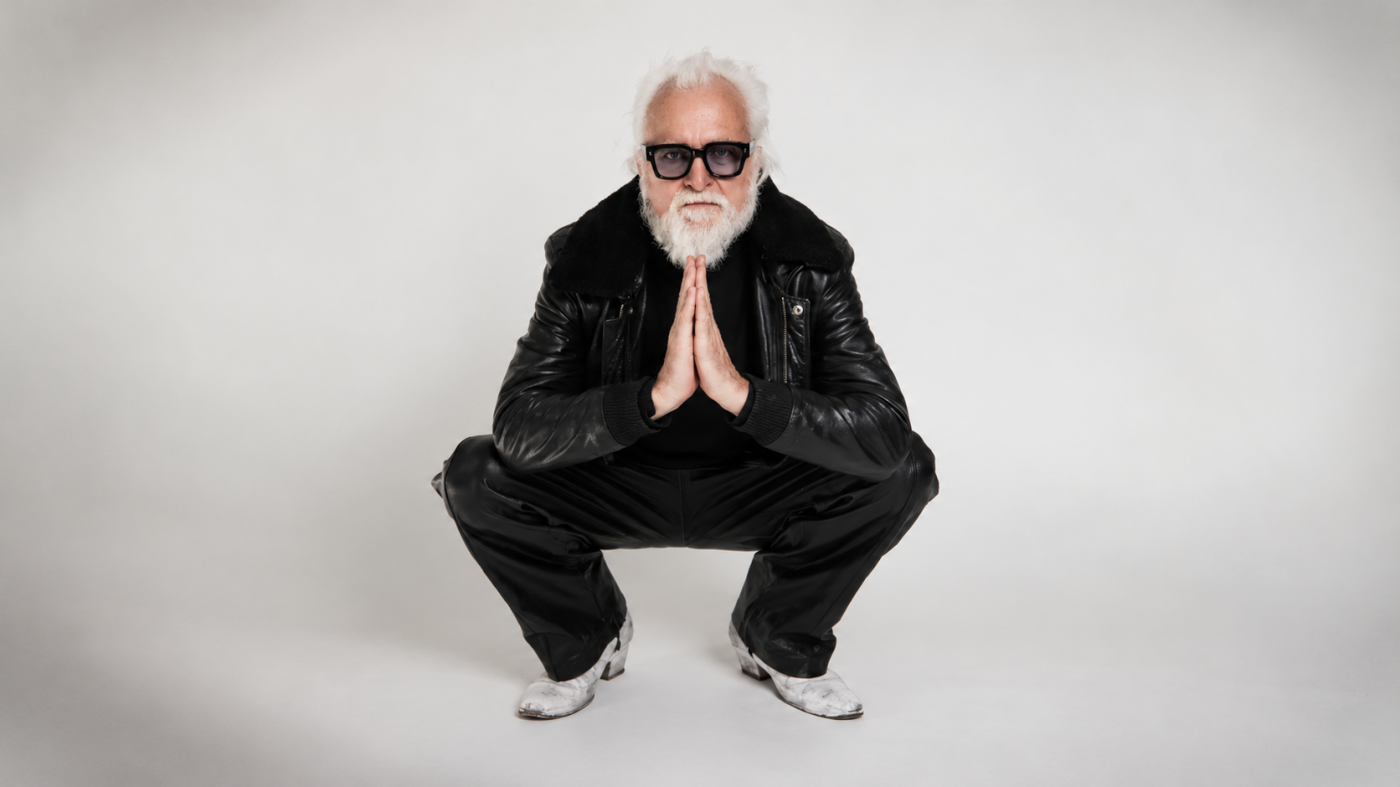
The brand began in Stockholm in 1996 and carries the name of its founder, Johan Lindeberg, who came from Diesel. The official account starts with a motorcycle trip through the south of France with a golf bag strapped on, and with a diagnosis: "golf apparel needed a revolution".
What the brand called a revolution pointed backwards. The canon it names sits entirely before the disorder of the eighties: the sharp silhouettes of the seventies, Walter Hagen's tailored knits, Arnold Palmer's pullovers, the way Steve McQueen wore his clothes. The enemy has a date as well, since by the late eighties, the brand writes, golf had lost its personality and the uniform had become oversized polos and beige chinos. The founding gesture was to take the game back to an elegance it had already lost. The first collection, FW1997, shown in New York under the title "21st Century Lifestyle", put menswear and golf together from the start. Even the detail Parnevik is remembered for, the flipped-up visor brim, was his own invention and predates the partnership.
THE CUT THAT BROUGHT THE COURSE CLOSER TO FASHION
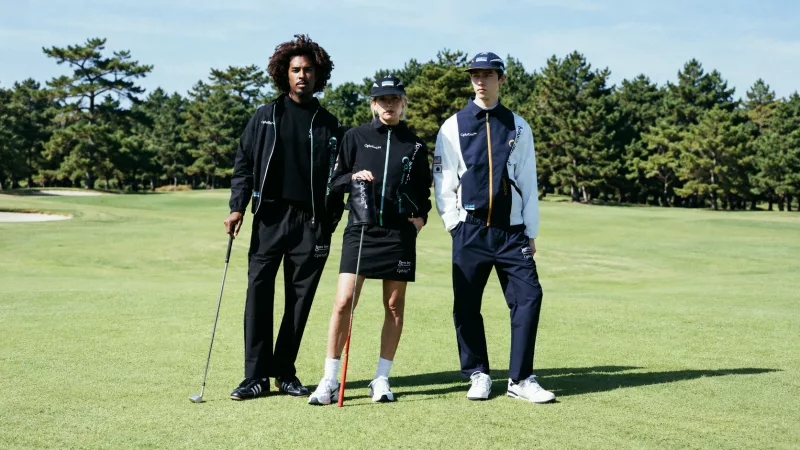
The logo is a bridge, the letters J and L interlocked, and the brand presents it as a programme linking sport and fashion. The real bridge, though, was the cut. In 1996, Johan Lindeberg recalled in a 2017 interview, golf and fashion were far apart, and a man who loved fashion and played golf was an exception. On the course people wore loose tops and wide trousers, still stuck in the eighties. His answer was to give golf clothing a shape: polos and trousers built around the body, colours combined as in a city collection, technical fabrics inside a fashion design. Lindeberg claims to have been among the first to do it.
The first to try it was Parnevik. Of his first pair of trousers he said they were so tight he could hardly bend down to take the ball out of the hole, but he shot a 63 that day and nothing else mattered. Tailoring changed the way a player stood on the course: the golfer stopped hiding inside the clothes and began to wear them.
Within ten years, by the founder's account, fitted trousers, white belts and coloured polos had become almost the new uniform of the game. Today the brand sums it up in two words, European fit, and the FW26 season, "Social Golf", carries the same idea past the last hole: "a day that doesn't end at the 18th hole".
THIRTY YEARS ON: THE ORIGIN GOES BACK INTO THE CATALOGUE
In 2026 J.Lindeberg turns thirty and puts its own past back into production. The anniversary capsule, 30 Year Anniversary (season SH26), is classified as Golf and RTW together, and its colour is a pink called "Azalea Pink", which echoes the one worn at Las Colinas. The 30Y Jesper Retro Relaxed Polo carries Parnevik's name and is a knitted polo: open collar, two-button placket, welt chest pocket, contrast tipping, tubular hem, the pre-beige garment the canon pointed to. The collection's official account hands the return to that moment to Peg Parnevik, the Swedish-American singer-songwriter and Jesper's daughter, who takes "The Pink Strategy" to a new generation; the sporting face remains Viktor Hovland, in the brand's family since 2019.
The 30Y Devyn Golf Pant comes in Azalea Pink, with the peg pocket stitched to the right leg, the one a player keeps his tees in. Two product pages, a knitted polo and a pair of trousers, carry the same colour name, and that is where the brand keeps the archive of itself.