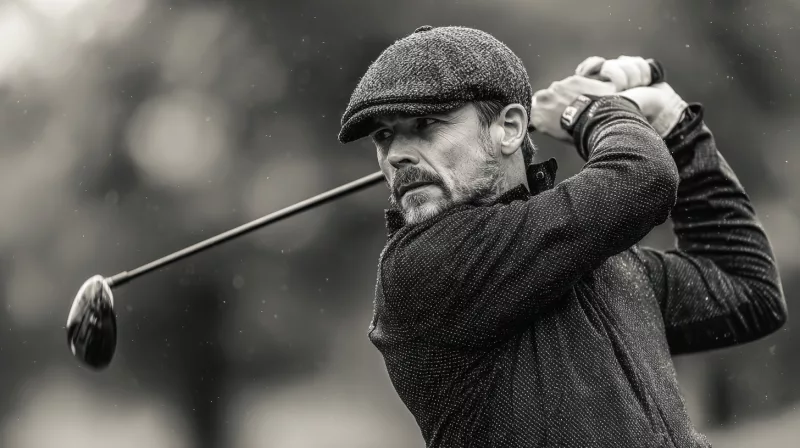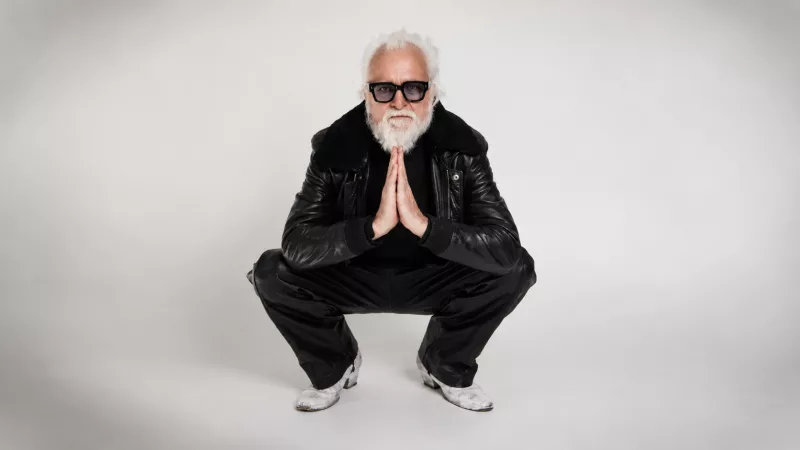


At Augusta in April 2026, Rory McIlroy turned back the collar of Tommy Fleetwood's gilet and looked at the label inside. The clip went round for days as on-course trivia. Fleetwood was playing the Masters without an apparel contract, fifteen years of Nike behind him, in a taupe ribbed polo from a Swedish label few outside Sweden could name. No press release had put that garment on the course; it became public because one player checked what another had on. The label is Late Nine, out of Stockholm, and its argument is that golf already had the right clothes.

FORM AS A POSITION
Late Nine sets performance aside rather than fighting it. The About Us page reads: "It's not that we're against performance, per se. We just don't believe in ultra-tight fits or an over-reliance on synthetic fibers." What it claims is form, spelled out garment by garment: an outward-facing double pleat and Italian four-season wool on the Double Pleat Slacks, first-shearing merino on the Cable Knit Polo, a "hefty cotton melange" for the ribbed polo.
The argument leans on the history of the game, since the same page recalls that the record for the most shots won at a major, the 2000 US Open, was set in wool trousers that look very wide today, and signs off with "Remember who wore them?". The spring-summer 2026 campaign starts from the 1997 Ryder Cup at Valderrama. The brand describes itself as sitting at the intersection of golf and nostalgic popular culture, though what it does is put an archive of cuts back into production. The Grassy Issue, in a September profile, ran the headline "The Clothes Look Private. The References Never Were." Agronomy Workshop refused synthetics on material grounds and Olydoe beat them on performance; this label declines the technical argument.
THE PROFESSIONAL'S BODY
The Nike deal, begun in 2010, ran out: "our contract was ending… I'm not wearing Nike stuff this year," Fleetwood told Golf Monthly in February 2026. Since then he has moved between brands freely: Lululemon, Vuori, G/FORE, Malbon, Sun Day Red, and whatever the pro shop had. At Augusta the Late Nine polo sat with Lululemon trousers and Sun Day Red shoes.
As of 8 October 2026 no sponsorship agreement between brand and player is on record, and the choice looks personal. That is the difference: an independent label enters the global conversation in golf through a player's choice rather than a contract signed with him.
McIlroy's gesture completes the mechanism. As long as a touring professional's clothing is a contract, asking who dresses him is a market question; once the contract is gone, the same question turns into fashion criticism, and the first to ask it was a colleague who had to read a label for the answer.

THE EUROPEAN SYSTEM
Behind it all is ERAS AB, a company founded in 2024 in Stockholm whose commercial debut came in October 2025. Production, as the brand sets it out, is a short European map: knitwear in Italy, jersey polos in Portugal, outerwear and trousers in Lithuania, leather goods in Denmark, components between Italy, Portugal and Japan, in runs described as limited, with no figure ever published. It is the reverse of the American performance-luxury of Lululemon and Sun Day Red, which plays the same course at another scale.
The point of view comes out of a Swedish condition. "Almost all clubs are non-private… very few months when we can actually play," Maxim Lundh told The Old Ghosts: public courses, a season of a few months, the game followed from outside, in evenings spent on Getty Images and on broadcasts of old Ryder Cups. Lundh came out of creative direction at CQP, the Swedish footwear brand, and it shows. "That propelled the brand from simple menswear adjacent golf to something much bigger," Taylor Stacey writes in the same piece.
A TIME OF DAY
The name is an hour. "Nothing beats the feeling of catching the sunset on a late summers evening on the back nine," Lundh says: the last holes as the light drops, golf at its least public. At Augusta in April that half-light ended up under the hardest light on the calendar. Golf has always carried its dress code stitched inside the collar; this year a player read it out loud.