
On December 2, 2025, the Prada Group acquired Versace from Capri Holdings for €1.25 billion. Capri had paid €1.9 billion for the brand in 2018. That's a €650 million loss in seven years — a measure of how badly the American holding company managed one of Italy's most iconic fashion houses.
The speed of what followed told the real story. Ten days after the acquisition, Dario Vitale — who had been appointed creative director just one season earlier — was removed. By February 5, 2026, Pieter Mulier was named his replacement. The entire creative leadership of the house was dismantled and rebuilt in two months.
The Designer Nobody Knows
20 YEARS
Pieter Mulier spent as Raf Simons' right hand. Jil Sander, Dior, Calvin Klein — always the architect behind the architect.
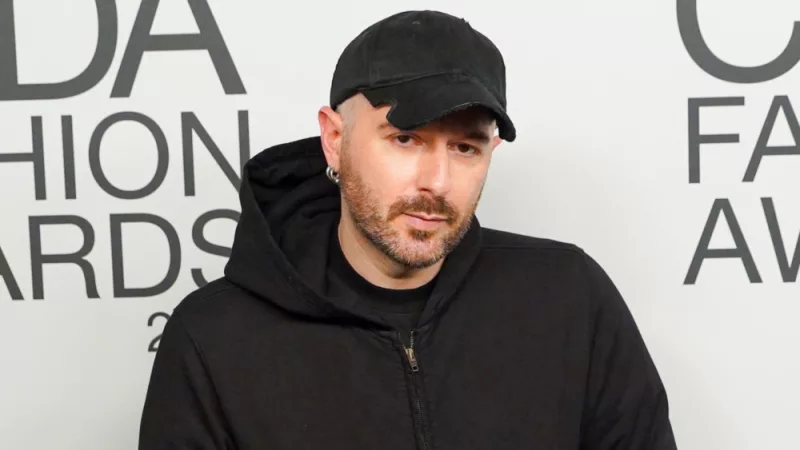
Mulier is one of fashion's most fascinating figures precisely because he's been invisible. For two decades, he shaped the collections that defined Raf Simons' reputation — the Dior couture presentations, the Calvin Klein reinvention, the Jil Sander minimalism — without receiving public credit. Now, for the first time, he designs alone. And he does so at Versace, a house whose maximalist DNA is the polar opposite of everything he's built his career on.
The appointment is effective July 1, 2026. His first collection won't appear on a runway until September at the earliest. But the implications are already seismic.
The Map Has Changed
Consider what the Prada Group now controls: Prada, designed by Raf Simons and Miuccia Prada. Miu Miu, the most culturally relevant brand of 2024-2025. Versace, soon to be designed by Raf Simons' former creative partner. Church's, the heritage footwear house. Four runway brands, one family, one aesthetic ecosystem.
Raf designs Prada. His former partner designs Versace. They share twenty years of creative DNA, the same visual language, the same intellectual framework. The Bertelli-Prada family didn't just buy a brand. They bought a city. Milan's fashion power structure has been fundamentally redrawn.
The Last Independent House
Versace was the last major independent Italian fashion house to fall. Consider the roll call: Gucci was absorbed by Kering in 1999. Fendi went to LVMH the same year. Valentino was acquired by Kering in 2012. Bulgari by LVMH in 2011. Bottega Veneta by Kering in 2001. Now Versace by Prada Group in 2025.
The only major Italian fashion house that remains independently held is Armani. And Giorgio Armani is ninety-one years old.
This isn't a market correction. It's the end of an era. The Italian fashion system — built by individual founders with singular creative visions — has been fully absorbed into conglomerate logic. The question is no longer whether consolidation will continue. It's whether anything remains to consolidate.
DEAS VERDICT
Prada didn't buy Versace for the brand. They bought it for the territory. Raf's partner at Versace, Raf at Prada, Miu Miu dominating culture — the Bertelli family now controls Milan's creative center of gravity. This is power consolidation unprecedented in fashion history.
Tags: Prada, Versace, Pieter Mulier, Prada Group, Italian Fashion, Fashion Systems, Luxury Economics