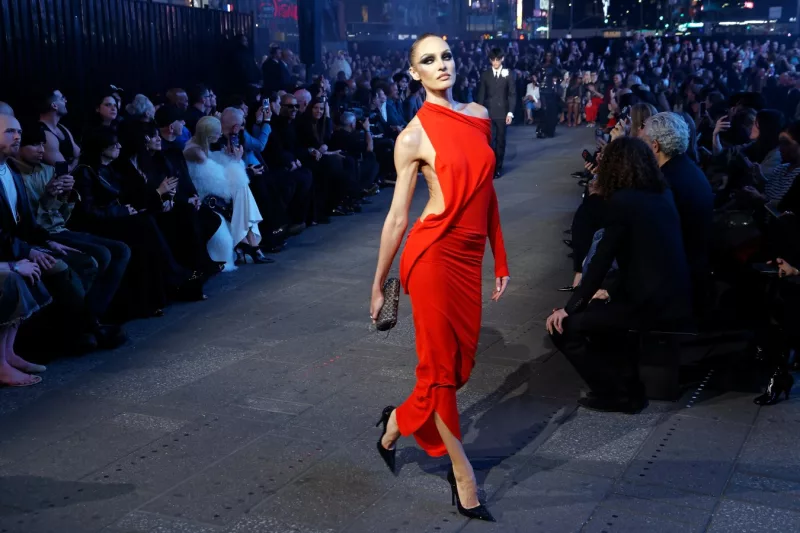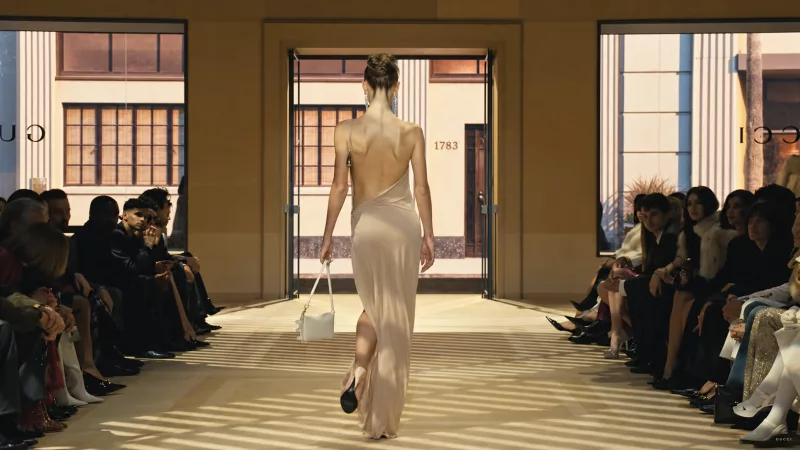

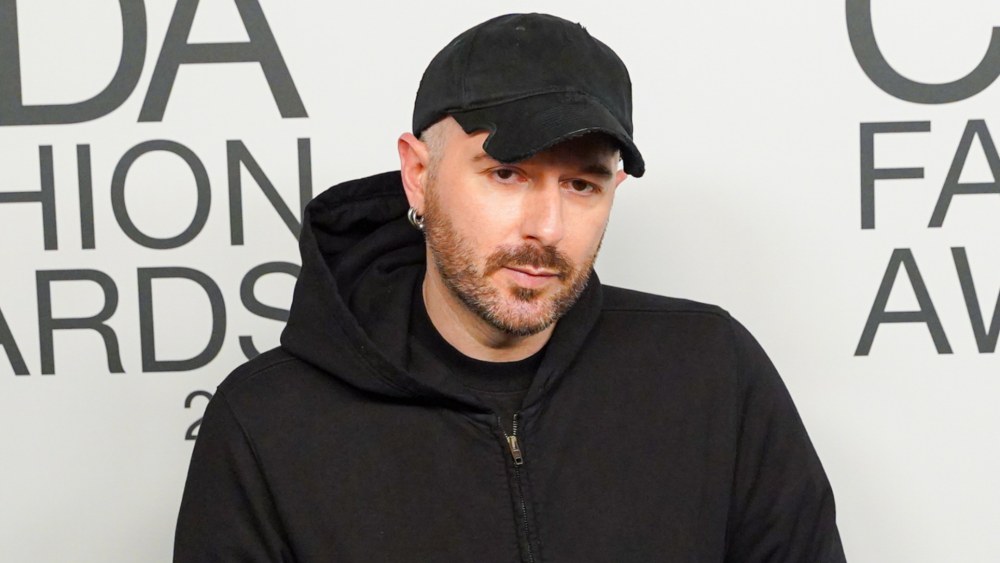
Let's be precise about what is happening at Palazzo delle Scintille on February 27. This is not a fashion show. It is a corporate stress test disguised as a runway. Demna Gvasalia's first full collection for Gucci will be evaluated not by the fashion press alone, but by Kering's shareholders, its board, and every analyst who has watched the luxury conglomerate bleed value for eighteen consecutive months.
The Numbers That Explain Everything
-14%
Kering group revenue decline, Q1 2025. Worst quarter in a decade.
50%+
Gucci's share of Kering's total revenue. One brand holds the entire conglomerate.
This is the fundamental asymmetry that makes Demna's appointment the most consequential creative director hire in a generation. Gucci isn't just Kering's biggest brand. It is Kering. If Gucci fails to recover commercial momentum, Kering doesn't survive in its current form as a luxury group. Saint Laurent and Bottega Veneta cannot compensate for the scale of the problem.
The numbers are unambiguous. Under Sabato de Sarno, Gucci's revenue declined further as the quiet luxury pivot failed to reignite consumer desire. De Sarno's tenure lasted barely two years — not enough time to build anything, but enough time to prove that restraint alone doesn't solve an identity crisis. Kering needed something different. They needed disruption.
The Demna Strategy: Baby Steps Before the Leap
Demna has not rushed. Since his appointment, he has released two lookbooks but zero runway shows. The first, La Famiglia, debuted at Milan Fashion Week in September 2025 as a film featuring 37 character portraits shot by Catherine Opie. No runway. No traditional presentation. Instead, a series of archetypes — L'Archetipo, La Contessa, La VIC, Narcisista — each embodying a different facet of what Demna calls 'Gucciness.'
The second lookbook, Generation Gucci, arrived in December. This time, Demna photographed it himself, staging it as a show that never happened: a single spotlight on a darkened turquoise backdrop, directly referencing Tom Ford's legendary 1995-96 runway presentations. The message was clear. Demna isn't just exploring Gucci's archive — he's obsessed with it. Ford-era sensuality. Michele-era Dionysus bags. Giannini-era scarf prints. Seventies equestrian codes.
He called the process 'baby steps.' But Kering's shareholders don't have the patience for baby steps. They need a giant leap.
What's striking about both pre-collections is the deliberate departure from Demna's Balenciaga identity. The oversized silhouettes are gone. In their place: slim tailoring in archival silk faille, seamless denim with invisible closures, pencil skirts, fitted leather. He's moving closer to the body, closer to desire, closer to what Gucci has historically represented — confidence, sexuality, presence.
The Real Test
The fashion press will evaluate the collection on aesthetic terms. The industry will evaluate it on something else entirely: can one designer's creative vision reverse the commercial trajectory of a brand that accounts for more than half of a €35 billion conglomerate's revenue?
Demna's Balenciaga proved he can build a universe from nothing. But Gucci already has a universe — or had one. The challenge isn't invention. It's reinterpretation. It's making Gucci mean something again without erasing what it meant before. The two lookbooks suggest he understands this. The archive reverence is genuine. The Ford references aren't pastiche — they're foundation.
But lookbooks are controlled environments. A runway is live. It's the moment where intention meets reality, where the clothes have to move and the audience has to feel something. February 27 is that moment.
___