
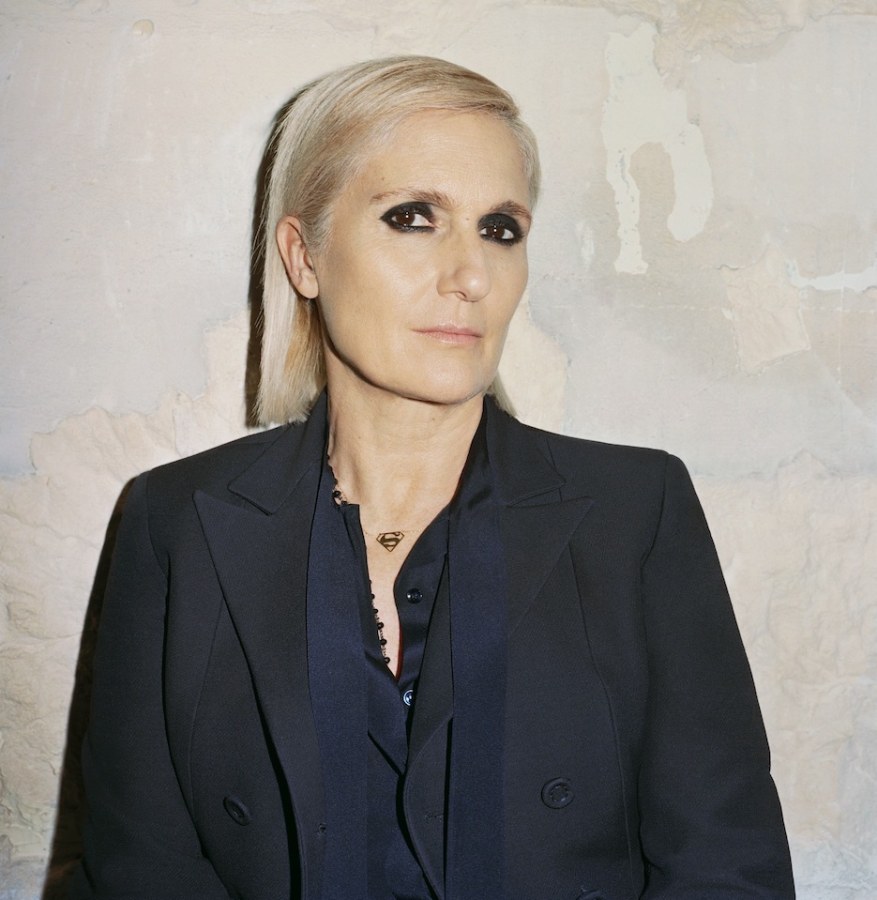
Maria Grazia Chiuri's career trajectory reads like a masterclass in luxury brand mechanics. During her nine years at Dior, from 2016 to 2025, she took the house's revenue from approximately €2.2 billion to an estimated €9.5 billion. She created the Book Tote — a canvas bag that became a billion-dollar franchise. She built the 'feminist Dior' narrative that gave the brand cultural relevance beyond fashion. She produced collection after collection, including Haute Couture, without apparent fatigue.
The press never loved her. Critics found her work safe, commercially calculated, insufficiently avant-garde. Chiuri never seemed to care. She wasn't designing for critics. She was designing for the women who actually buy luxury — and for the P&L statement that Bernard Arnault reads every quarter.
The Fendi Problem
Kim Jones ran Fendi's womenswear for four years. The collections were polished, technically proficient, and entirely forgettable. No iconic bag emerged. No cultural moment crystallized. No clear identity took shape beyond 'refined Italian craftsmanship' — a positioning so generic it could describe a dozen brands.
Fendi was disappearing inside LVMH. Not failing — just fading. In a conglomerate that includes Louis Vuitton, Dior, Loewe, and Celine, a quiet Fendi is a redundant Fendi. The brand needed either a creative earthquake or a commercial machine. LVMH chose the machine.
The Homecoming That Isn't One
The narrative around Chiuri's appointment has been framed as a return. She worked at Fendi from 1989 to 1999, alongside Pier Paolo Piccioli, before both moved to Valentino. She co-designed the original Baguette bag. There's genuine history here.
But LVMH doesn't traffic in sentimentality. This is the same conglomerate that removed Virgil Abloh's team from Louis Vuitton within months of his passing and installed Pharrell Williams. Chiuri's appointment is strategic, not romantic. She proved at Dior that she can take a heritage house, build an accessory franchise around it, and drive revenue at scale. LVMH is betting she can do it again.
€2.2B → €9.5B
Dior revenue growth during Chiuri's tenure. The most profitable creative direction in modern fashion.
February 25: Day One
Chiuri's debut opens Milan Fashion Week on February 25. The scheduling is deliberate. LVMH wants Fendi to set the tone for the entire week — before Marni, before Prada, before Gucci. It's a statement of intent: Fendi is back, and it's going first.
The question is whether the Book Tote playbook translates. Dior had couture mythology, Parisian glamour, and a feminist rebranding opportunity. Fendi has Roman craftsmanship, fur heritage (increasingly complicated), and a family legacy. The raw materials are different. Chiuri's method — find the commercial product, build the cultural narrative around it — will be tested on terrain she knows intimately but hasn't worked in twenty-seven years.
DEAS VERDICT
Chiuri has never designed for critics. She designs for revenue. If she gives Fendi a bag that sells like the Book Tote, LVMH wins the week before it even starts. Her first show opens MFW. That's not coincidence — that's corporate confidence.